Soft Shell vs Hard Shell Lobster: The Basics
If you have ever bought lobster from a seafood market and wondered why some feel rock-solid while others seem to give slightly under pressure, you have encountered the fundamental divide in the lobster market: soft shell versus hard shell. These are not different species. They are the same animal at different stages of its life cycle, and the difference in the eating experience is dramatic enough that experienced lobster buyers treat them as two entirely different products.
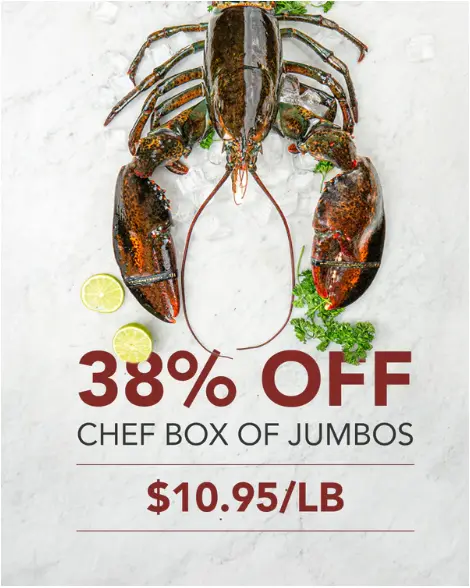

A lobster grows by shedding its old shell and growing a new, larger one underneath. Before the molt, the lobster absorbs water to swell its body and crack the old shell. After the molt, the new shell is soft and leathery, and the lobster is filled with excess water. Over the following weeks and months, the shell gradually hardens as calcium carbonate is deposited into the exoskeleton, and the water is replaced by tissue. A soft-shell lobster — also called a shedder or a new-shell lobster — has recently molted. A hard-shell lobster has fully calcified its shell and is approaching its next molt.
This distinction matters for everything: how much meat you get, how it tastes, how you cook it, how much it costs, and whether you can ship it live. This guide covers every angle so you can make the right choice for your meal. And when you are ready to buy, understanding the difference will help you get the best value from fresh Maine lobster.
The Molting Cycle Explained
Lobsters grow by molting. The shell does not stretch, so the only way to increase size is to shed the old one. The frequency of molting decreases with age. A young lobster may molt several times in its first year. A market-size lobster of one to two pounds molts once or twice per year. A very large, old lobster may go two to three years between molts.
The molting process itself is physically demanding and dangerous. The lobster swells with water to create pressure that cracks the old shell, then extracts its body through a split between the carapace and the tail. It emerges soft, vulnerable, and defenseless. For several days after molting, the lobster hides in rocks or burrows to avoid predators while its new shell begins to harden. During this period, it does not eat. It survives on the water and the fat reserves stored in its body.
The full calcification of the shell takes four to eight weeks, depending on water temperature. Warmer water speeds calcification. Colder water slows it down. This is why the soft-shell season in Maine runs from July through October — the lobsters have molted in the warmer summer and early fall waters, and the shells harden more quickly than they would in winter but not quickly enough to reach full hardness before they are caught.
Fishermen can tell the difference immediately. A soft-shell lobster has a shell that gives slightly when squeezed. The carapace edge is flexible rather than rigid. The tail meat when cracked open is shrunken and watery compared to a hard-shell. Experienced buyers at the dock grade each catch by shell hardness, and the price adjusts accordingly.
Meat Yield and Quality
This is the single most important practical difference. Hard-shell lobsters contain significantly more meat per pound than soft-shell lobsters. The exact ratio varies depending on how recently the lobster molted, but the difference is roughly 25 percent yield for a hard-shell versus 15 to 18 percent for an early-stage soft-shell. That means a 1.25-pound hard-shell yields about 5 ounces of meat, while the same weight soft-shell yields about 3 to 3.5 ounces.
The meat is also different in quality. Hard-shell meat is firm, dense, and fully developed. The tail has a satisfying snap when you cut into it. The claw meat separates into clean, moist flakes. The flavor is concentrated and sweet because the animal has had time to build tissue and store flavor compounds.
Soft-shell meat is the opposite. Because the lobster has just absorbed a large volume of water to swell out of its old shell, the meat is watered down. The tail can be flaccid and soft. The claw meat is less defined. The flavor is milder — some would say less interesting — because the concentration of amino acids and flavor compounds is diluted by the excess water content.
This does not mean soft-shell lobster is bad. Many people who grew up in coastal New England communities actually prefer soft-shells for certain preparations. The softer texture makes the meat easier to extract, and the milder flavor is thought by some to be more delicate. But from a pure value perspective — the amount of lobster you get per dollar spent — hard-shell is the clear winner.
Price Differences and Market Timing
Soft-shell lobsters are cheaper. A soft-shell at the dock typically sells for 30 to 50 percent less per pound than a hard-shell from the same catch. The price difference reflects the lower meat yield, the higher transport mortality rate, and the shorter shelf life. At the retail level, the gap narrows but remains significant — expect to pay $2 to $4 less per pound for soft-shells during the peak shedder season.
The timing of the soft-shell season is predictable. In the Gulf of Maine, the molt begins in June in the warmer inshore waters and peaks in July and August. The soft-shell catch dominates the market from July through October. By November, most lobsters that molted during the summer have hardened their shells to the point where they are close to fully calcified, and the market shifts back to hard-shells for the winter months.
Winter lobsters — harvested from November through April — are almost always hard-shell. These are the lobsters that command the highest prices, and they are also the best for shipping live over long distances. A hard-shell lobster caught in January can be shipped to California or Asia with minimal mortality. A soft-shell lobster shipped the same distance would suffer significant losses.
If you are buying lobster from a source that ships live product, you will almost always receive hard-shell lobsters. The economics of shipping soft-shells do not work — the mortality is too high, and the product quality upon arrival is too variable. Some of the best prices for live hard-shells come in late spring, before the soft-shell season begins, when the previous winter’s catch is still available but demand has not yet shifted to the shedder market.
Cooking Considerations
Soft-shell and hard-shell lobsters cook differently, and the cooking method should be adjusted accordingly.
Hard-shell lobsters require longer cooking times. The thick shell insulates the meat, so it takes more time for heat to penetrate to the center. A 1.25-pound hard-shell lobster needs roughly 10 to 12 minutes in boiling water or 12 to 14 minutes in steam. The shell does not crack easily during cooking, which means the meat stays moist and protected.
Soft-shell lobsters cook faster. The thin, porous shell offers less insulation, so the meat cooks in about 7 to 9 minutes for the same size. But there is a risk: the shell can crack during cooking, allowing the meat to be exposed to the cooking water, which leaches flavor and creates a waterlogged texture. To mitigate this, many experienced cooks steam soft-shells rather than boiling them. The gentler heat reduces the risk of shell cracking.
Grilling is tricky with soft-shells. The delicate shell breaks apart easily on a hot grill, and the meat dries out quickly because there is less shell to protect it. If you want to grill lobster, hard-shells — or better yet, frozen raw tails — are the safer choice.
Lobster rolls benefit from either type, but the approach differs. For a Connecticut-style roll (warm butter), hard-shell meat holds up better because the denser texture withstands the butter bath without falling apart. For a Maine-style roll (cold mayonnaise), soft-shell meat works because the delicate texture blends nicely with the creamy dressing.
For more detailed cooking instructions, our guide to cooking lobster at home covers specific timing for both shell types.
How to Tell the Difference at the Market
When you are standing at a seafood counter trying to decide which lobster to buy, here is how to tell the difference.
Squeeze the carapace. The carapace — the main body shell — should be rock-hard if the lobster is hard-shelled. Press your thumb firmly against the side of the carapace near the tail. If it flexes or gives even slightly, it is a soft-shell. If it feels like a rock, it is hard-shelled.
Check the shell color. Hard-shell lobsters tend to be a darker, more uniform greenish-brown. Soft-shell lobsters often have a lighter, more mottled appearance because the new shell has not fully developed its pigmentation. The antennae on soft-shells are usually more flexible and less brittle.
Weigh it in your hand. Pick up two lobsters of similar size, one hard-shell and one soft-shell. The hard-shell will feel heavier and more solid. The soft-shell will feel lighter and slightly hollow. This is the water-weight difference — a soft-shell has excess water that will drain out during cooking, while a hard-shell carries more dense meat.
Look at the tail curl. When a lobster is handled, it curls its tail under its body. A hard-shell lobster has strong tail muscles that produce a tight, immediate curl. A soft-shell lobster’s tail curl is looser and slower because the muscles have not fully recovered from the molt. When you pick up a soft-shell, the tail often hangs down rather than curling tightly.
Check for cracking or missing claws. Soft-shell lobsters lose claws more easily than hard-shells. The new shell has not fully attached to the underlying muscle tissue, so the claws can be pulled off with minimal force. A soft-shell with both claws intact is a good sign that it was handled carefully during harvest.
If all this seems like too much effort, you can also just ask. A reputable seafood seller will know whether their lobsters are hard-shell or soft-shell and will tell you honestly. If they do not know, consider buying elsewhere. For a more detailed look at how fresh compares to frozen, that guide also covers some of the same freshness indicators.
Which One Should You Buy?
The difference between soft-shell and hard-shell lobster is not a matter of better or worse. It is a matter of different seasons, different economics, and different cooking applications. The answer depends on what you are cooking and what you value.
Buy hard-shell when: you want the most meat per dollar, you are shipping or traveling with the lobster, you want the sweetest and most concentrated flavor, you are grilling or broiling, or you are cooking for a special occasion where the presentation matters. Hard-shell is the default choice for most lobster cooking, and it is the standard that every other option is measured against.
Buy soft-shell when: you are on a tighter budget and want the lowest price per pound, you are making lobster rolls and want the most tender texture, you are cooking for a casual meal where extraction ease matters more than meat yield, or you want to experience the seasonal delicacy that New Englanders talk about. Soft-shells are also a good option if you are new to cooking lobster — the shells are easier to crack, and the shorter cooking time reduces the risk of an overcooked dinner.
With either choice, proper storage matters. Our guide on storing live lobster at home covers the temperature and handling requirements that keep lobsters alive and healthy until you are ready to cook them. Soft-shells are more sensitive to storage conditions than hard-shells, so if you buy soft-shells, cook them the same day if possible.
Understanding the difference means you can shop with confidence regardless of the season. If you want the premium product, buy hard-shells in winter and spring. If you want the seasonal bargain, buy soft-shells in late summer and fall. Either way, you are getting real Maine lobster from one of the best-managed fisheries in the world. And when you are ready to put that knowledge to use, order live lobster delivered to your door and enjoy it at its peak.
It is a matter of different seasons, different economics, and different cooking applications. Hard-shell gives you more meat, better flavor concentration, and a forgiving cooking window. Soft-shell gives you a lower price, easier access to the meat, and a tenderness that some prefer for certain dishes.
Understanding the difference means you can shop with confidence regardless of the season. If you want the premium product, buy hard-shells in winter and spring. If you want the seasonal bargain, buy soft-shells in late summer and fall. Either way, you are getting real Maine lobster from one of the best-managed fisheries in the world. And when you are ready to put that knowledge to use, order live lobster delivered to your door and enjoy it at its peak.
Leave a Reply