Walk into a seafood market and you might see lobster from Maine, spiny lobster from Florida, rock lobster from Australia, and langoustine from Scotland. They are all called some variation of lobster, but they are not interchangeable. The differences between species affect everything about how they taste, how you cook them, and how much you should pay. Choosing the wrong one for your recipe can turn an expensive meal into a disappointing one, check out our guide on types of lobster..
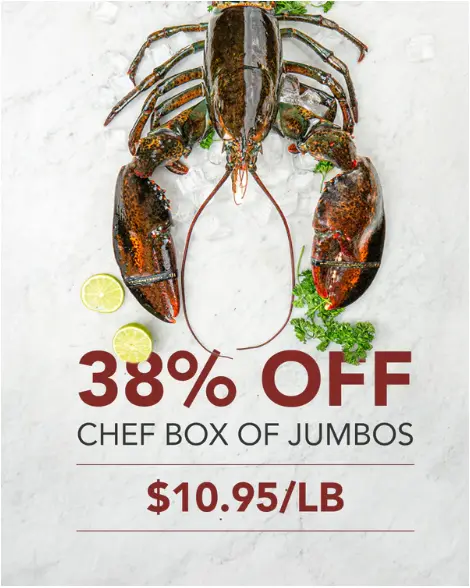
This guide covers every commercially significant lobster species — clawed lobsters, spiny lobsters, slipper lobsters, and their close relatives — with a focus on flavor, texture, habitat, and best cooking uses. By the end, you will know exactly which lobster to buy for any dish. And when you decide that cold-water clawed lobster is what you want, you can buy premium Maine lobster online delivered live to your door.
Clawed Lobsters: The True Lobsters
Clawed lobsters belong to the family Nephropidae. They are what biologists consider true lobsters — the animals that have the large, asymmetrical claws that most people picture when they think of lobster. Two species dominate the global market: the American lobster and the European lobster.
The American lobster (Homarus americanus) is the most commercially important lobster species in the world. It ranges from Labrador to North Carolina along the Atlantic coast of North America, with the highest concentrations in the Gulf of Maine, off the coast of Nova Scotia, and in the Bay of Fundy. American lobsters are dark greenish-brown in the wild, with a mottled appearance that blends into the rocky seafloor. They have two large claws — a crusher and a pincer — that are filled with tender, sweet meat. The market size is typically 1 to 3 pounds, though they can grow to over 40 pounds in rare cases.
The European lobster (Homarus gammarus) is the Old World equivalent of the American lobster. It ranges from Norway to the Mediterranean, with the highest concentrations off the coasts of the United Kingdom, Ireland, and France. European lobsters have darker, bluer shells than their American cousins, with more pronounced spots and patterns on the carapace. They are slightly more aggressive and grow more slowly, reaching market size at 6 to 8 years old compared to 5 to 7 for American lobsters of equivalent weight. The meat is similar in flavor and texture to the American lobster, though some connoisseurs say European lobsters have a slightly sweeter, more delicate flavor because of their slower growth in colder European waters.
In the kitchen, clawed lobsters are interchangeable. The cooking times are the same by weight. The meat yield is comparable. The flavor difference is subtle enough that most people cannot tell them apart in a blind tasting. The practical difference is price: European lobsters typically cost 20 to 40 percent more than American lobsters in North American markets because they are harvested in lower volumes and shipped across the Atlantic.
Spiny Lobsters: Clawless and Spined
Spiny lobsters belong to the family Palinuridae. They have no large claws — their main edible meat comes from the tail. Instead of claws, they have two long, thick antennae and a body covered in forward-pointing spines that make them difficult for predators to swallow.
The Caribbean spiny lobster (Panulirus argus) is the most common spiny lobster in North American markets. It ranges from Bermuda through the Bahamas, Florida, the Gulf of Mexico, and down to Brazil. It is typically sold as frozen tails — the whole animal is rarely shipped live because the tails are the only commercially valuable part and the animals are more delicate than clawed lobsters. Caribbean spiny lobster tails range from 4 to 16 ounces, with the most common size being 8 to 12 ounces.
The California spiny lobster (Panulirus interruptus) ranges from Monterey Bay, California, down to the southern tip of Baja California, Mexico. It is a warm-water species that lives among rocky reefs and kelp forests. California spiny lobster tails are slightly larger and firmer than Caribbean spiny lobster tails, with a more concentrated flavor. They are prized by West Coast chefs for grilling and broiling.
Australian rock lobster (Panulirus cygnus and Jasus edwardsii) is exported globally and considered the premium spiny lobster product. The Western Australian rock lobster (Panulirus cygnus) is the most abundant, harvested from the waters off Western Australia. The Southern rock lobster (Jasus edwardsii) is harvested from the waters around New Zealand and southern Australia. Both are known for their large size — tails can reach 2 pounds or more — and their exceptionally firm, sweet meat. Australian rock lobster commands the highest prices of any spiny lobster species, often $25 to $40 per pound for frozen tails in the US market.
Slipper Lobsters: The Overlooked Cousin
Slipper lobsters belong to the family Scyllaridae. They are the least known of the major lobster groups, but they are worth seeking out. Slipper lobsters have no claws and no long antennae. Instead, they have flattened, shovel-shaped antennae that they use for digging in the sand. Their shells are flattened and broad, giving them a shape that looks more like a cross between a lobster and a crab.
The most commercially important slipper lobster species are the shovel-nosed lobster (Thenus orientalis) from Australia and Southeast Asia, and the Spanish slipper lobster (Scyllarides aequinoctialis) from the Caribbean and the Gulf of Mexico. Slipper lobster meat is found primarily in the tail, like spiny lobster, but the texture is different — it is denser and firmer, almost like a cross between lobster tail and crab claw meat in texture. The flavor is sweet and mild, similar to spiny lobster but with less brininess.
Slipper lobsters are most commonly available in Asian seafood markets and specialty seafood retailers. They are not widely distributed in North American supermarkets, which makes them something of a hidden gem for adventurous cooks. They grill and broil well because the firm tail meat holds its shape over high heat, and they are excellent in Thai and Southeast Asian curries where the mild flavor absorbs the curry spices without competing with them.
Maine Lobster vs American Lobster: One and the Same
There is no biological difference between a Maine lobster and an American lobster. Maine lobster is a marketing term for Homarus americanus that is harvested specifically from the waters off the coast of Maine. American lobsters from Canada, New Hampshire, Massachusetts, and Rhode Island are the exact same species. The only differences are environmental.
Maine lobsters are often said to be superior because the cold, clean waters of the Gulf of Maine produce lobsters with firmer, sweeter meat. There is some truth to this. Lobsters from the eastern Gulf of Maine — particularly those caught off the coast of Downeast Maine and the island communities — grow in some of the coldest, most nutrient-rich waters on the Atlantic coast. The cold water slows their metabolism and produces meat with a higher concentration of free amino acids, which translates to sweetness. Lobsters from the western Gulf of Maine, off New Hampshire and northern Massachusetts, grow in slightly warmer water and tend to have milder flavor.
Canadian lobsters from Nova Scotia and New Brunswick are harvested from waters that are even colder than those off the coast of Maine, particularly in the Bay of Fundy and the waters off the eastern shore of Nova Scotia. Many experienced lobster buyers consider Nova Scotia lobsters to be the best in the world for flavor and texture. The cold water produces an exceptionally firm tail and sweet, well-developed claw meat.
In practice, the differences between lobsters from different parts of the species’ range are small compared to the differences between species. A Maine lobster, a Nova Scotia lobster, and a Massachusetts lobster are all Homarus americanus, and they all taste more like each other than any of them taste like a spiny lobster or a European lobster.
Warm Water vs Cold Water Lobster: What Matters
The water temperature where a lobster lives is the single most important factor in determining the quality of its meat. Cold water produces better lobster. This is not a matter of opinion. It is a matter of biology.
Cold-water lobsters — those from waters below 60 degrees Fahrenheit — grow more slowly than warm-water lobsters. A cold-water lobster takes 5 to 7 years to reach legal harvest size. A warm-water lobster of the same weight can reach harvest size in 3 to 4 years. The slower growth means the meat develops a more concentrated flavor because the animal has had more time to accumulate the amino acids and glycogen that produce sweetness. The meat is also firmer because the muscle tissue has developed under colder conditions, which produces denser, more tightly packed muscle fibers.
Cold-water lobsters also produce more flavorful fat. The hepatopancreas (tomalley) of a cold-water lobster is richer and more complex than that of a warm-water lobster because the animal has stored more energy reserves to survive the winter. The roe (if present) is also more flavorful in cold-water lobsters for the same reason.
Warm-water lobsters — those from waters above 68 degrees Fahrenheit — grow faster and produce meat that is milder and less sweet. The texture is looser and more fibrous. The tomalley is less flavorful and can sometimes have a slightly bitter or muddy taste if the lobster has been feeding in silty or sandy bottoms. Warm-water lobsters also have a higher risk of carrying parasites and diseases, though these are rarely a concern for consumers because the animals are screened before export.
This is why Maine, Canadian, and European lobsters command higher prices than Caribbean spiny lobsters and most other warm-water species. The cold water produces a superior product, and the market reflects that difference.
Lobster vs Crayfish: Same Family, Different Scale
Crayfish — also called crawfish, crawdads, or freshwater lobsters — are the freshwater equivalent of marine lobsters. They belong to the same superfamily (Astacoidea and Parastacoidea) and share the same basic body plan: a segmented body, ten legs, and a pair of claws. The critical difference is habitat. Crayfish live in freshwater rivers, streams, lakes, and swamps. Lobsters live exclusively in saltwater.
Crayfish are much smaller than lobsters. The average crayfish caught for food is 3 to 6 inches long and weighs 2 to 4 ounces. The largest crayfish species, the Tasmanian giant freshwater crayfish (Astacopsis gouldi), can reach 11 pounds, but it is rare and protected. Most commercially available crayfish are harvested from the Louisiana swamps (Procambarus clarkii) and farmed in China and Southeast Asia.
The flavor of crayfish is similar to lobster but milder and less sweet. The texture is softer and more delicate. Crayfish are typically cooked in heavily seasoned boils with corn, potatoes, and sausage — the seasoning compensates for the milder flavor. They are never eaten plain with butter in the way that lobster is, because the meat is not flavorful enough to stand on its own.
In recipes, you can substitute crayfish for lobster in soups, bisques, and étouffées, where the seasoning carries the flavor. You cannot substitute crayfish for lobster in preparations where the meat is the star — lobster rolls, whole steamed lobster, or grilled lobster tails. The difference in size, sweetness, and texture is too large.
Lobster vs Langoustine: The Confusion Explained
The langoustine (Nephrops norvegicus) is the source of more seafood confusion than almost any other animal. It is called by at least a dozen different names depending on where you are in the world: langoustine in France, scampi in Italy and the UK, Dublin Bay prawn in Ireland, Norwegian lobster in Scandinavia, and shrimp in some parts of the United States. It is not a prawn, not a shrimp, and not exactly a lobster either — though it is in the same family as lobster.
Langoustine is a small, clawed crustacean that looks like a miniature lobster. It grows to 7 to 10 inches in length and weighs 2 to 5 ounces. It has the same asymmetrical claws as a lobster — one crusher and one pincer — but the claws are proportionally longer and more slender. The shell is a pale pinkish-orange rather than the dark greenish-brown of a lobster. Langoustine is found in the northeastern Atlantic, from Iceland to Morocco, with the highest concentrations in the North Sea, the Irish Sea, and the waters around Scotland.
The flavor of langoustine is significantly sweeter and more delicate than lobster. Some chefs describe it as a cross between lobster and shrimp — the sweetness of lobster with the tenderness of shrimp. The texture is softer than lobster because the animal is smaller and grows faster. The claw meat is particularly prized for its tenderness and sweetness.
Langoustine is more expensive than lobster on a per-pound basis, typically $15 to $25 per pound for frozen raw tails and $25 to $40 per pound for live or fresh whole langoustine. The price reflects the smaller size, shorter shelf life, and labor-intensive catching process — langoustine are caught in trawls that are sorted by hand, and the animals are delicate and need careful handling to avoid damage.
In cooking, langoustine is best treated gently. It is excellent grilled or broiled whole, as the small size cooks in 3 to 4 minutes. It is also the classic ingredient in Italian scampi, where the whole animal is sautéed in garlic butter and white wine. Langoustine tails are used in paella and seafood stews where their sweetness can infuse the broth without becoming tough from extended cooking.
If you see langoustine on a menu, order it. It is one of the finest-tasting crustaceans in the world, and it is different enough from lobster to be worth experiencing on its own terms. If you see frozen langoustine tails at a seafood market, buy them — they are an excellent alternative to lobster tails for a special meal.
Which Species Tastes Best for Cooking?
If you are cooking a dish where the lobster is the centerpiece — steamed whole lobster, lobster rolls, lobster thermidor — the choice is clear: clawed lobster from cold water. American lobster, European lobster, Maine lobster, Nova Scotia lobster — any of these will produce the sweetest, most tender, most flavorful result. The claws add variety to the eating experience that no other species can match. If you can only get one species, make it American lobster.
If you are grilling or broiling tails, spiny lobster is an excellent choice. The firm, fibrous texture holds up to high heat without falling apart. Australian rock lobster tails are the best of the spiny lobsters for this application, followed by California spiny lobster and then Caribbean spiny lobster. American lobster tails are also excellent but more expensive and harder to find as standalone tails.
If you are making a soup, bisque, or stew, any species will work, but the most cost-effective choice is the smallest and cheapest option. Crayfish, langoustine, and small spiny lobster tails all work well in preparations where the meat is chopped and the flavor is supplemented by aromatics and seasoning.
If you are looking for value, frozen spiny lobster tails from the Caribbean are the most affordable option for most home cooks. They are widely available, relatively inexpensive, and perfectly adequate for grilled or broiled preparations. They will not match the sweetness of a cold-water clawed lobster, but they are a solid choice for a weeknight meal.
And if you want the best possible eating experience — the combination of sweet claw meat, tender tail, and the varied textures that make eating a whole lobster so satisfying — the answer is always a cold-water clawed lobster from the North Atlantic. Buy premium Maine lobster online and experience the difference for yourself.
Leave a Reply