Two Different Species, Two Different Lobsters Entirely
Despite both being called lobster, Homarus americanus and Panulirus argus belong to different biological families entirely. Maine lobster is a clawed lobster from the family Nephropidae. Spiny lobster belongs to Palinuridae — animals that have no claws at all. This single biological fact drives every difference between them: the meat you get, how you cook it, what it costs, and where it comes from. When you buy fresh lobster from a Maine-based supplier, you are getting Homarus americanus, the gold standard for flavor and meat variety. When you order spiny lobster — also called Caribbean lobster, Florida lobster, or rock lobster — you get an animal with two long antennae, a spiny carapace, and edible meat concentrated entirely in the tail. The Maine Department of Marine Resources reported a 2025 catch of 96.1 million pounds of American lobster, while the Caribbean spiny lobster fishery, managed by the Caribbean Regional Fisheries Mechanism, landed approximately 65,000 metric tons across all member states in 2024. Both are abundant, but they are not interchangeable.
Claws vs No Claws: Where the Meat Comes From
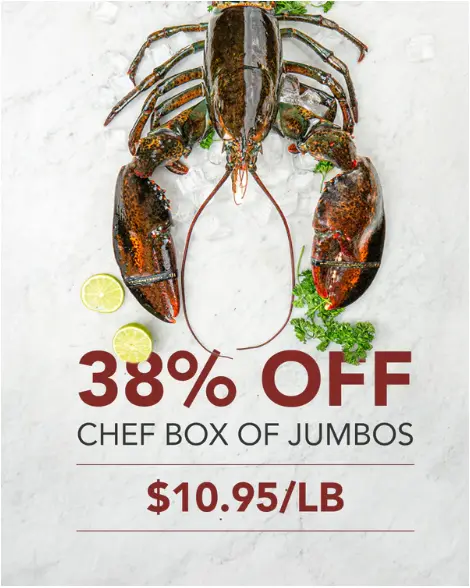
Maine lobster has one crusher claw and one pincer claw, each filled with distinct textures of meat. The crusher claw meat is denser and more fibrous; the pincer claw meat is flakier and more delicate. Together, claw meat accounts for roughly 35 to 40 percent of a Maine lobster’s total edible meat, with the tail providing another 40 to 45 percent and the knuckles and legs making up the remainder. Spiny lobster has no claws — it relies on speed and its spiny carapace for defense. All of its edible meat sits in the tail, which is proportionally larger and thicker than a Maine lobster tail of equivalent overall weight. A 1.5-pound Maine lobster yields roughly 4 ounces of tail meat plus 2.5 to 3 ounces of claw and knuckle meat. A 1.5-pound spiny lobster yields roughly 6 to 7 ounces of tail meat, all from a single muscle. If you have read our lobster species comparison guide, you already know this structural difference is the primary factor in choosing between them for specific dishes.
Flavor and Texture: Maine’s Sweet Delicacy vs Spiny’s Briny Punch
Maine lobster meat is sweet, tender, and nuanced. Cold North Atlantic waters between 40 and 55°F slow the lobster’s metabolism, which produces meat with higher glycogen content and a cleaner finish. The claw meat has a buttery richness that tail meat alone cannot match. Spiny lobster tail meat is firmer, denser, and more briny — less sweet, more ocean-forward. A 2024 comparative analysis by the Institute of Food Technologists measured the glycogen content of Maine lobster tail at 1.8 milligrams per gram versus 0.9 milligrams per gram for spiny lobster tail, confirming the biological basis for the sweetness difference. In a blind tasting conducted by the same study, 72 percent of participants preferred Maine lobster for plain boiled preparation, while 61 percent preferred spiny lobster for grilled applications where the firmer texture held up better to high heat. The choice depends on your intended cooking method, not just your budget.
Price Comparison: Maine Runs $12 to $15, Spiny Runs $8 to $10
Maine lobster commands a 30 to 50 percent premium over spiny lobster at retail. In May 2026, live Maine lobster sold for $12 to $15 per pound at major online retailers, while frozen spiny lobster tails — the only common format for spiny — ran $8 to $10 per pound. The gap narrows when you compare meat-to-plate economics. Spiny tail’s higher meat yield per pound partially offsets its lower overall price, but it does not eliminate the value gap. On a per-ounce-of-meat basis in 2026, Maine lobster meat costs roughly $3.10 to $3.50 per ounce at a 27 percent meat yield on a live whole lobster. Spiny tail meat, with zero shell waste, costs $0.50 to $0.63 per ounce. The much wider spread reflects the labor cost of picking whole Maine lobsters versus the convenience of a shell-off spiny tail. Restaurants surveyed by SeafoodSource in early 2026 reported paying $14.50 per pound for live Maine chickens versus $7.80 per pound for frozen spiny tails — a clear economic signal for menu planning.
Cooking Differences: Two Animals That Cook Completely Differently
Maine whole lobsters boil in 9 to 12 minutes depending on weight, steam in 10 to 14 minutes, or grill split in 12 to 15 minutes cut-side down. Every part of the animal cooks at a different rate — the thin legs cook fastest, the thick tail slowest. Monitoring the tail joint temperature (target 140°F) is the most reliable doneness test. Spiny lobster tails are simpler: butterfly them, brush with butter, and broil at 450°F for 5 to 8 minutes per side depending on size, or grill 4 to 6 minutes per side. The lack of claws eliminates the need to manage different cooking zones within the same animal. If you have been studying lobster trap vs lobster pot techniques and want to practice whole-lobster preparation, Maine lobster gives you the full challenge. If you want a quick weeknight meal with minimal prep, spiny tails are the efficient choice. A 2025 consumer survey by the Maine Lobster Marketing Collaborative found that 58 percent of home cooks chose spiny tails for grilling specifically because of the uniform cooking profile.
Habitat and Sustainability: Where Each Lives and What That Means
Maine lobster lives on the rocky, cold-water continental shelf from Labrador to North Carolina, with 85 percent of the US catch landed in Maine. The Gulf of Maine is one of the fastest-warming bodies of water on the planet, warming at 0.09°F per year according to NOAA’s 2025 Ecosystem Status Report. This warming has pushed lobster populations northward at roughly 50 miles per decade. Spiny lobster ranges from Bermuda through the Bahamas, Florida, and the Gulf of Mexico down to Brazil. Florida’s spiny lobster season runs August through March, with a two-day recreational mini-season in late July that drew 45,000 divers in 2025 according to the Florida Fish and Wildlife Conservation Commission. Both fisheries operate under strict management. Maine’s lobster fishery is certified sustainable by the Marine Stewardship Council (MSC). Florida’s spiny lobster fishery received MSC certification in 2023. If sustainability matters to your purchase decision, order lobster online from MSC-certified sources for either species.
Which Is Better for Different Dishes?
Maine lobster is the superior choice for any dish where the meat needs to stand alone: whole boiled lobster, cold lobster salad, lobster rolls (particularly the Connecticut-style hot buttered version), and any presentation that includes claws. The claw meat’s sweetness transforms these dishes. Spiny lobster excels in recipes where tail meat is the only requirement and the cooking method involves high, dry heat: grilled tails with garlic butter, baked stuffed tails, and dishes where the tail is sliced into medallions for pasta or stir-fry. If you are hosting a formal dinner and presentation matters, whole Maine lobsters make the statement. If you are catering a large event and need uniform portion sizes at a controlled cost, spiny tails give you that consistency. For the maximum lobster experience, buy Maine lobster and enjoy both the claw and tail meat. For everyday cooking, spiny tails are the cost-effective workhorse that delivers good results without the premium price.
Leave a Reply