How Long to Boil Lobster Per Pound? A Complete Timing Guide
Standing over a pot of boiling water with a live lobster in your hand is a moment that separates confident home cooks from nervous ones. The biggest question everyone asks: how long do you boil lobster per pound? Get the timing wrong and you end up with rubbery, overcooked meat or — worse — undercooked lobster that’s unsafe to eat. The good news is that the formula is simple once you know it. This guide covers exact boiling times by weight, the factors that affect cooking, and what to do if your lobster is bigger (or smaller) than expected.

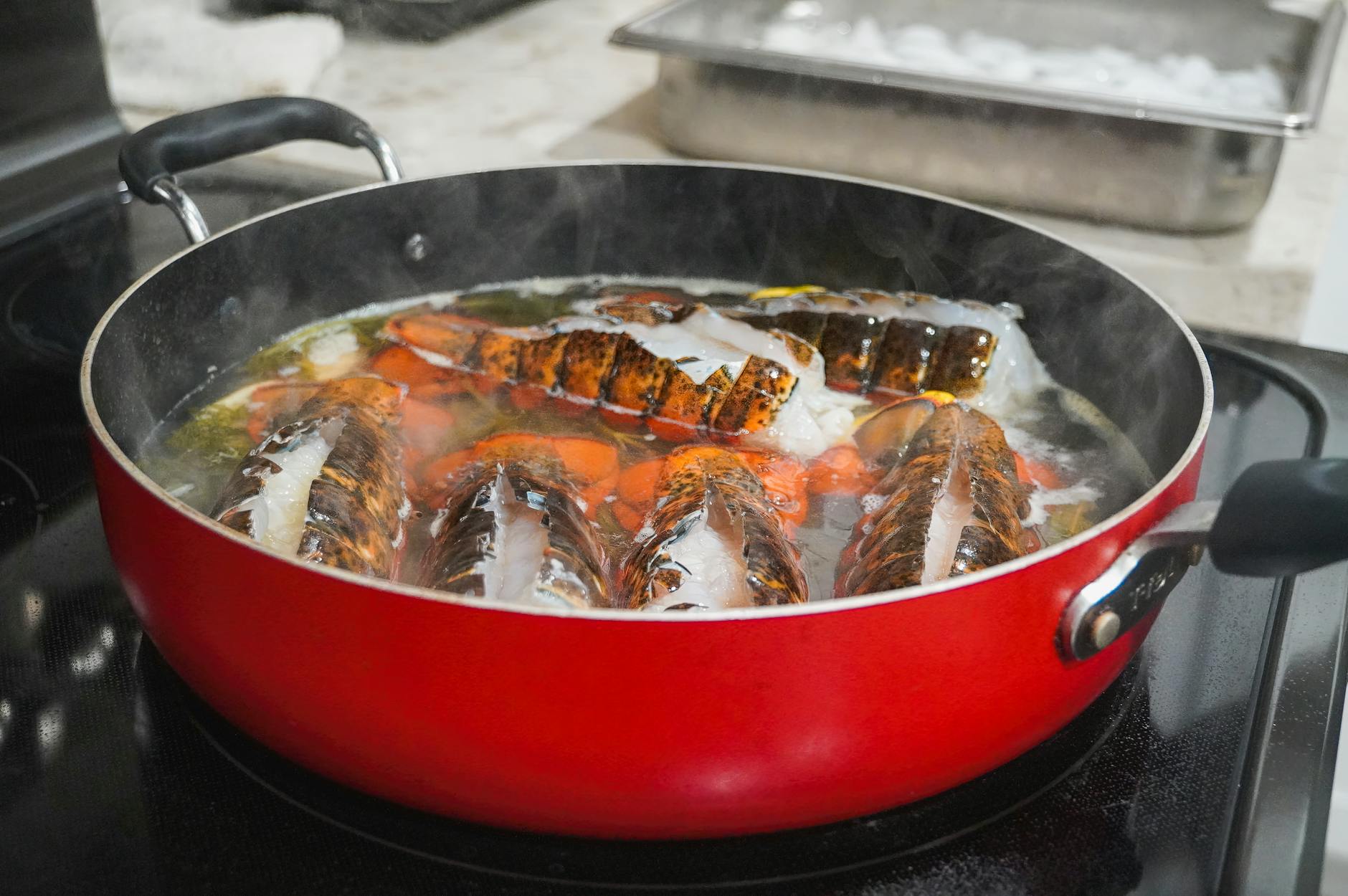
The Basic Formula: How Many Minutes Per Pound?
Here is the standard timing chart that most New England lobstermen and chefs agree on, based on boiling live lobsters in a pot of salted water. These times start counting from the moment the water returns to a full boil after you add the lobster.
- 1 pound: 10 minutes
- 1.25 pounds: 11 minutes
- 1.5 pounds: 12 minutes
- 1.75 pounds: 13-14 minutes
- 2 pounds: 15 minutes
- 2.5 pounds: 18 minutes
- 3 pounds: 20 minutes
- 4 pounds: 22-24 minutes
- 5 pounds: 25-28 minutes
Notice the pattern: roughly 10 minutes for the first pound, then 3-4 additional minutes per pound after that. This isn’t linear because larger lobsters have more thermal mass relative to their surface area, so heat penetrates more slowly into the center.
My take: I always cook to the shorter end of the range. A lobster that’s slightly undercooked can go back in the pot for another minute. A lobster that’s been boiled for 25 minutes when it needed 18 is ruined — dry, tough, and disappointing. When in doubt, pull it out at the minimum time and check by twisting off a small leg. If the meat is opaque and pulls away cleanly, it’s done.
Does Starting With Cold Water Affect the Timing?
Yes, and this is where most home cooks make their first mistake. You must start with the water at a rolling boil before adding the lobster. If you drop a lobster into cold water and bring it to a boil together, you are effectively poaching the lobster in its own juices, and the meat will turn out tough and unevenly cooked.
Using cold water as a starting point has another problem: it takes too long to come back to a boil, and during that extended warm-up period, enzymes in the lobster start breaking down the meat. The result is a texture that’s closer to mush than to tender, flaky lobster.
The correct method: fill your pot with enough water to fully submerge the lobster by at least 2 inches. Add salt — about 2 tablespoons per quart of water. Bring the water to a furious, rolling boil. Then, and only then, add the lobster head-first. Cover the pot and start your timer when the water returns to a boil, not before.
Does Altitude Change Boiling Time?
Absolutely. Water boils at 212°F at sea level, but at 5,000 feet, it boils at approximately 202°F. That 10-degree difference means the water is transferring less heat energy to the lobster, so cooking takes longer. If you live in Denver (5,280 feet), Salt Lake City (4,200 feet), or anywhere in the Rocky Mountains, you need to add roughly 1-2 additional minutes per pound to account for the lower boiling point.
At 7,000 feet or higher, add 3 minutes per pound. The easiest way to test doneness at high altitude is to check the internal temperature of the tail meat — it should reach 140-145°F. Alternatively, pull a small leg; the meat should be white and firm, not translucent. If you’re serving multiple people and wondering how much to boil per person, use this guide to how much lobster per person so you buy the right quantity before you even start cooking.
Do Frozen Lobsters Cook at the Same Rate?
No. Frozen lobsters (whether raw or pre-cooked) take longer to cook because the heat has to first thaw the meat before it can start cooking it. For frozen raw lobster tails, add 3-5 minutes to the standard timing, depending on size. For frozen whole lobsters, it’s best to thaw them completely in the refrigerator overnight before boiling, otherwise the outer meat will be overcooked by the time the center thaws.
If you’re in a hurry and must boil from frozen, increase the standard time by 50%. A frozen 1-pound lobster tail would need about 15 minutes instead of 10, and you should check the thickest part of the tail with a thermometer before serving.
How to Tell When Lobster Is Done (Visual and Temperature Signs)
Timing charts are guidelines, not guarantees. Here’s how to confirm your lobster is perfectly cooked regardless of weight or altitude:
- Color: The shell turns bright red. Undercooked lobster retains dark patches, especially on the tail and carapace.
- The leg test: Pull off one of the small walking legs. If the meat comes out clean and is white and opaque, the lobster is done. If the meat is translucent or sticks to the shell, it needs more time.
- The antennae: On a fully cooked lobster, the long antennae pull out easily with a gentle tug.
- Internal temperature: Insert an instant-read thermometer into the thickest part of the tail through the underside. You’re looking for 140-145°F.
My strong opinion: The leg test is the most reliable method I’ve found over hundreds of lobsters cooked at home. It’s instant, it doesn’t ruin the presentation, and it never lies. Thermometers are great, but crawling under a lobster to find the right tail insertion point while it’s hot is more trouble than it’s worth. Just pull a leg.
What About Steaming vs. Boiling?
Steaming is a gentler cooking method that many lobster purists prefer. Because the lobster isn’t submerged in water, less flavor leaches out, and the meat tends to be slightly sweeter and more tender. Steaming takes about 1-2 minutes longer per pound than boiling. A 1.5-pound lobster that would take 12 minutes to boil needs about 14-15 minutes in a steamer basket.
Steaming also uses less water and is easier to manage — no giant pot of boiling water to maneuver. The trade-off is that you can only steam one or two lobsters at a time, while you can boil four or five in a large pot. If you’re cooking for a crowd, boiling is more practical. For a romantic dinner for two? Steam them. The texture difference is noticeable and worth the extra few minutes.
If you run into any issues during cooking — whether from timing uncertainty or quality concerns — our 50-question lobster FAQ covers nearly every cooking problem you might encounter. You’ll find troubleshooting tips there that save dinner.
Final Takeaway: Trust the Formula, Then Trust Your Senses
The 10-minute-per-first-pound plus 3-4 per additional pound rule is your starting point, not your final word. Altitude, frozen state, and pot size all affect real cooking time. Adjust for your specific conditions, use the leg test to confirm doneness, and always err on the side of slightly under rather than over. A perfectly boiled lobster is one of the great pleasures of home cooking — and with the right timing, you’ll nail it every time. Buy the right sizes for your guests, boil confidently, and serve knowing the timing is exactly right.
Leave a Reply