Lobster Coconut Curry — Fragrant, Creamy, and Bursting with Flavour
Thai coconut curry is one of the most aromatic, deeply satisfying things you can make in a single pot. The combination of creamy coconut milk, fragrant lemongrass, spicy galangal, and fresh herbs creates a sauce that’s complex, balanced, and utterly addictive. Add lobster to that equation, and you get a curry that’s both luxurious and weeknight-easy. The sweet, tender meat of lobster is a natural match for the rich, aromatic coconut broth — the lobster absorbs the curry’s flavours while still holding its own. This Thai-style lobster coconut curry is based on a classic red curry formula, with a few adjustments to let the lobster shine. Serve it over jasmine rice, and you have a meal that tastes like it came from a Bangkok restaurant but comes together in under 40 minutes.
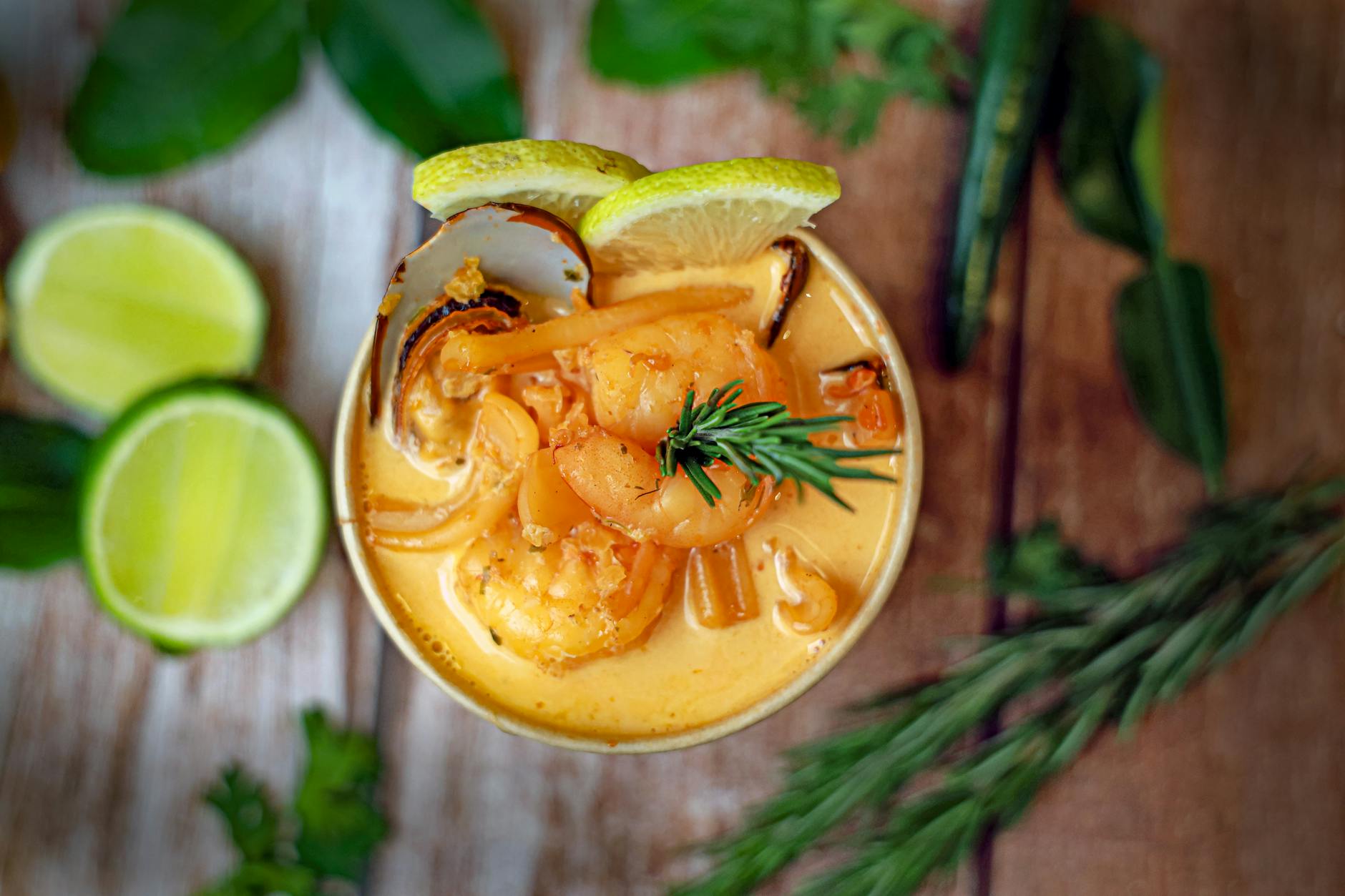
Ingredients for Lobster Coconut Curry
Serves 4 with rice. The ingredient list looks long, but most of it is pantry spices and aromatics.
- 2 lobster tails, meat removed and cut into chunks
- 2 lobster claws, cracked, meat removed and left whole if possible
- 1 can (400ml) full-fat coconut milk
- 2 tablespoons Thai red curry paste (use a good brand or homemade)
- 1 stalk lemongrass, outer layers removed, bruised and cut into 2-inch pieces
- 3 kaffir lime leaves, torn (or zest of 1 lime)
- 1-inch piece galangal (or ginger), sliced into thin coins
- 2 shallots, thinly sliced
- 3 cloves garlic, minced
- 1 tablespoon fish sauce (or soy sauce for a vegetarian version)
- 1 teaspoon palm sugar or brown sugar
- 1/2 cup Thai basil leaves (regular basil in a pinch)
- 1 red chili, sliced (optional, for heat)
- 2 tablespoons vegetable oil
- Fresh cilantro, for garnish
- Lime wedges, for serving
- Steamed jasmine rice, for serving
The Base — Building Layers of Flavour
Thai curry is all about layering flavours. Start by opening the can of coconut milk without shaking it — the thick cream rises to the top. Scoop out about 3 tablespoons of the thick cream and heat it in a large pan or wok over medium-high heat. This coconut cream is your cooking fat. Add the red curry paste and stir-fry for 2 minutes until very fragrant. The paste will darken and the oil will separate slightly — that’s exactly what you want. Add the sliced shallots and minced garlic, cooking for another minute. The aromatics — lemongrass, galangal, and kaffir lime leaves — go in next. Bruise the lemongrass with the flat side of a knife to release its oils before adding. Stir everything together and cook for 2 minutes until the kitchen smells like a Thai market. This base is where all the lobster flavour will later build upon, so take the time to do it right.
We earn a commission if you purchase through your links, at no extra cost to you.
Building the Curry Sauce
Pour in the remaining coconut milk and stir to combine with the aromatics. Bring to a gentle simmer, then add the fish sauce and palm sugar. Stir until the sugar dissolves. Let the curry simmer for 10 minutes — this allows the lemongrass, galangal, and kaffir lime leaves to infuse the coconut milk with their aromatic oils. The sauce should be thick enough to coat the back of a spoon. If it’s too thick, add a splash of water or seafood stock. Taste and adjust the seasoning — more fish sauce for saltiness, more sugar for sweetness, more curry paste for heat. The sauce should be balanced: salty, sweet, spicy, and sour all at once. This balance is the hallmark of good Thai curry. When you’re happy with the flavour, gently add the lobster chunks and claws to the simmering sauce. Cook for 3 to 4 minutes — just long enough to heat the lobster through. Overcooking will make it tough. The lobster should be tender and juicy, not rubbery.
My Take on Curry Paste — Store-Bought Is Fine, but Choose Wisely
I’m a realist about Thai curry paste. Making it from scratch with a mortar and pestle is a beautiful thing, but most home cooks don’t have the time or the ingredients (fresh galangal, fresh turmeric, shrimp paste, and a dozen dried chilies) to do it justice. Good-quality store-bought paste is absolutely fine. But not all brands are equal. I’ve tried a lot of them, and my preference is for Mae Ploy or Mae Anong — they’re saltier and more pungent than Western supermarket brands, which tend to be watered down and sweetened. A Thai brand will give you a more authentic, punchier curry. If you’re unsure, start with 2 tablespoons and add more to taste. A good-quality set of Thai curry pastes is a worthwhile investment — you get red, green, yellow, and panang pastes that will last for months in the fridge and transform dozens of meals. I keep a stash on hand at all times.
Finishing Touches — Thai Basil and Lime
Remove the pot from the heat. Stir in the Thai basil leaves — they’ll wilt from the residual heat, releasing their anise-like fragrance. Thai basil has a spicier, more savoury flavour than sweet Italian basil, and it’s a crucial component of authentic Thai curry. If you can’t find it, regular basil will work, but the flavour profile changes. Garnish with fresh cilantro and sliced red chili. Serve the lobster coconut curry over steamed jasmine rice in wide bowls. Place a lime wedge on the side — squeezing lime over the curry just before eating brightens all the flavours and cuts through the richness of the coconut milk. The rice should be fluffy and separate, ready to soak up every drop of that fragrant coconut sauce. A simple cucumber salad on the side (sliced cucumber, rice vinegar, sugar, and cilantro) adds a cool, refreshing contrast.
Variations and Substitutions
This recipe is flexible. If you don’t have lobster, large shrimp or prawns work beautifully as a substitute — just adjust the cooking time. For a more substantial meal, add vegetables like bamboo shoots, bell peppers, or Thai eggplant along with the coconut milk. If you prefer a milder curry, use green curry paste instead of red — it’s made with fresh green chilies and is generally less fiery. For extra heat, add a spoonful of sambal oelek or finely chopped bird’s eye chilies. And if you want to stretch the curry to feed more people, add more vegetables and serve with extra rice. The lobster is the star, but the curry itself is so good you’ll want to sauce everything. For more tips on cooking lobster and making the most of your seafood, our ultimate guide to cooking lobster tails covers everything from preparation to perfect timing.
Final Thoughts — A Curry That Delivers Every Time
Lobster coconut curry is the kind of dish that feels special enough for a dinner party but quick enough for a Wednesday night when you need something exciting. The flavours are bold, the sauce is luxurious, and the lobster — sweet, tender, and bathed in that fragrant coconut broth — is simply unforgettable. It’s a reminder that Thai food doesn’t have to be complicated to be incredible. Good paste, good coconut milk, fresh aromatics, and quality lobster — that’s really all you need. Serve it with plenty of rice, a cold beer or a crisp white wine, and maybe a little extra Thai basil on the side. One bite, and you’ll understand why coconut curry and lobster are a match made in Southeast Asian heaven. Make it this week. You’ll be glad you did.
Leave a Reply